
AI Strategy
& Analysis
AI Strategy
What to expect
Use‑Case & Value Discovery
Identify high‑impact AI opportunities across functions, tied to business goals and measurable outcomes
Readiness & Risk Assessment
Assess digital maturity, data availability, system landscape, and compliance risks to avoid false starts
ROI‑Based Prioritisation
Rank use cases by impact, feasibility, risk, and effort to focus on the fastest wins
12‑Month AI Roadmap
Build a step‑by‑step plan with KPIs, resources, and a start‑ready pilot recommendation
Executive Guidance
Provide decision support and sparring for leadership to align objectives, governance, and investmen
Use‑Case & Value Discovery
We begin with focused stakeholder interviews and 2–3 compact workshops (leadership + process owners) to surface specific pains that have measurable upside (e.g., backlog in support, manual PDF entry, slow lead follow‑up). Each pain is translated into a well‑formed use‑case card with: business objective (time, cost, quality), affected process steps, data involved, success criterion (e.g., reduce handling time from days to hours), and risks. This avoids generic “AI brainstorming” and anchors the discussion in concrete, valuable outcomes. You exit this phase with a pragmatic opportunity register (often 15–20 ideas) aligned to your goals and resource realities, not to vendor agendas.
Readiness & Risk Assessment
In parallel, we perform a lightweight but rigorous assessment of data, systems, governance, and change. Concretely:
1) data availability/quality checks for the shortlisted use cases
2) a quick mapping of your tool landscape (CRM/ERP/M365, shared mailboxes, ticketing) and integration constraints
3) GDPR/EU‑AI‑Act implications for data processing, logging, model selection, and data residency
4) organisational readiness (ownership, capacity, acceptance).
The output is a traffic‑light feasibility sheet per use case and a short risk log with proposed mitigations (e.g., EU hosting, on‑prem options, pseudo‑anonymisation). This de‑risks downstream work and prevents investing in pilots that cannot be deployed.
ROI‑Based Prioritisation
We score each opportunity on business impact, feasibility, effort, data readiness, compliance risk, and time‑to‑value. The matrix produces a “Now / Next / Later” stack and calls out low‑effort, high‑impact pilots first (e.g., support deflection, document automation, lead qualification). The result is a transparent investment narrative you can defend to leadership and teams: we start where value is tangible, technical risk is low, and adoption likelihood is high. For SMEs, this disciplined filtering is key to avoiding “AI projects that look good on slides but never launch.”
12‑Month AI Roadmap
The roadmap converts priorities into a pragmatic plan: phases, milestones, KPIs (e.g., % deflection, handling time, hours saved), resource assumptions, and budget ranges. It defines the first pilot (scope, dataset, interfaces, acceptance criteria) and shows how capabilities can be reused across later projects (e.g., the same extraction pipeline serving different document types). Instead of a static deck, you receive an execution‑ready plan geared to SMAPAS’ proven pilot cadence of 4–6 weeks to first results, followed by scale‑up. This gives leadership predictability and teams a concrete start.
Executive Guidance
Decision‑makers receive concise option papers (Value/Risk/Cost/Time), governance recommendations (roles, change communication, data handling), and a “go/no‑go” pack for the first pilot. The emphasis is on clarity and confidence: you can approve with eyes open, knowing the business case, the compliance posture, and how success will be measured. This aligns with your boutique positioning: independent, compliant, results‑oriented, and tailored to SME realities.
Other impacts
we make
impacts
Use‑case & value discovery
Readiness & risk assessment
ROI‑based prioritisation
12‑month AI roadmap
Executiveguidance
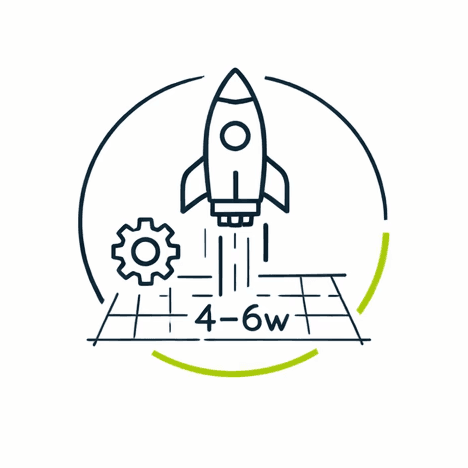
Working prototype in 4–6 weeks
Process & document automation
Custom AI agents & chatbots
Solution integration with CRM/ERP/M365
Validated path to scale
AI Readiness Tool
LeadAgent
MarketingAgent
AI Automation Hub